We act as a commercial plumber for many local and residential businesses
Water Heater Repair & Installation in Brentwood, CA
Hot water is an essential part of modern living. From a warm shower in the morning to running the dishwasher after dinner, your water heater works silently in the background to provide comfort and sanitation. When this system fails, it is immediately noticeable and highly disruptive. At Brentwood Plumbing Pros, we specialize in comprehensive water heater repair and installation services. We are dedicated to ensuring that the residents and businesses of Brentwood have reliable access to hot water year round.
Water Heater Repair and Installation in Brentwood, California – Traditional and Tankless Experts
Brentwood Plumbing Pros handles all types of water heater work for homeowners across Brentwood, California and the surrounding East Contra Costa communities of Oakley, Antioch, Discovery Bay, Byron, Knightsen, and Pittsburg. Whether you need water heater repair, a water heater replacement, a full water heater installation, a tankless water heater upgrade, a gas water heater tune-up, an electric water heater repair, a sediment flush, or help diagnosing a leaking water heater, we cover it all under one roof.
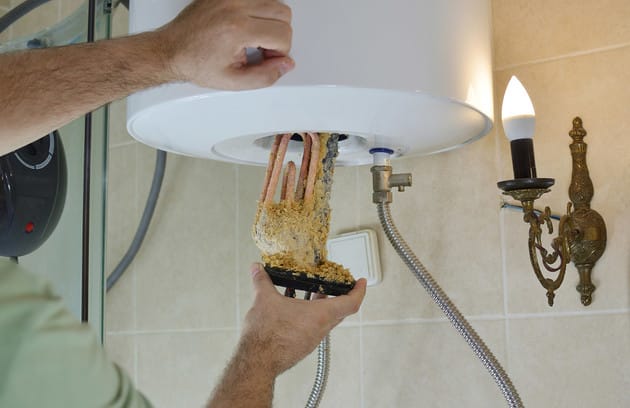
Brentwood’s hard water conditions are well known to anyone who has lived in East Contra Costa County for more than a few years. The mineral content in the water supply accelerates sediment buildup inside tank-style water heaters, shortens heating element life in electric models, and clogs the heat exchanger cells in tankless units. Homes in established neighborhoods like Apple Hill, Shadow Lakes, and Deer Ridge see these effects regularly, and we factor local water conditions into every diagnosis we make.
We work carefully and thoroughly. Every water heater job starts with a real diagnosis, not a guess, and we give you a clear explanation of what we found before any work begins. Our scheduling is dependable across Brentwood and the surrounding service area, and for situations where you simply cannot go without hot water, same-day response is a priority we take seriously.
Here is a detailed look at every water heater problem we handle and how we approach each one.
Common Water Heater Problems We Fix in Brentwood
No Hot Water or Insufficient Hot Water
Walking into a cold shower is an immediate signal that something in the water heating system has failed, and it is one of the most common calls we receive from Brentwood homeowners. A fix for no hot water emergency in Brentwood depends entirely on what caused the failure, and the answer varies considerably between a gas water heater with a pilot issue, an electric water heater with a failed element, and a tankless water heater that is fault-coding because of a sensor or flow problem.
In Brentwood homes where the water heater is running a full household of four or more people, insufficient hot water that runs out faster than expected is often a sign that the lower heating element in an electric unit has burned out and only the upper element is carrying the load, reducing effective capacity by half.
Recognizing the Problem
- No hot water at all from any fixture in the house
- Water that starts warm but turns cold within two or three minutes
- Hot water that only reaches a lukewarm temperature at its best
- Hot water is inconsistent, meaning it is hot sometimes and barely warm other times
- The water heater seems to be running constantly but the water never gets hot enough
- One bathroom has hot water but another does not, pointing to a mixing valve issue
- Hot water stopped completely after an overnight power outage
- The water heater circuit breaker keeps tripping when the unit tries to heat
We start the diagnostic by checking whether the issue is a power or gas supply problem, a component failure, or a capacity issue caused by sediment buildup reducing the effective tank volume. For electric water heater repair, we test both elements and the thermostat with proper meters rather than replacing parts by guesswork. For gas units, we check the pilot assembly, the thermocouple, and the gas valve. For a tankless water heater that is not heating, we read the fault code and trace it through the unit’s diagnostic logic. Hard water conditions in Brentwood are a contributing factor in many no-hot-water calls, since heavy sediment insulates the heating element from the water it is supposed to heat and causes failures well ahead of the unit’s expected service life.
Leaking Water Heater
A water heater leaking from the bottom of the tank is one of the more urgent problems we see, because once the tank itself has corroded through to the point of leaking at the base, repair is no longer an option. A leaking water heater at the top connections or at the pressure relief valve discharge line is a different situation that may be repairable, but any active water heater leak needs evaluation immediately to prevent flooring, drywall, and cabinetry damage from a slow drip that becomes a flood.
In Brentwood’s older neighborhoods, homes built in the 1970s and early 1980s that still have their original water heaters are rare, but water heaters installed in the late 1990s and early 2000s during Brentwood’s growth period are now reaching and exceeding their expected service life.
Recognizing the Problem
- Water pooling around the base of the tank with no other nearby source
- Visible rust streaks running down the outside of the tank body
- Water dripping from the pressure relief valve discharge pipe continuously
- Moisture or corrosion at the cold water inlet or hot water outlet connection at the top
- A small steady drip from the drain valve at the bottom of the tank
- Soft flooring or discoloration of drywall near the water heater enclosure
- Water heater leaking from the top connection joints or flex connectors
- Standing water in the water heater pan that refills over a few hours
When we diagnose a leaking water heater, we identify the source precisely before recommending a course of action. A leaking connection fitting or a failed pressure relief valve can be repaired without replacing the unit. A tank that is leaking from the body or the base cannot be repaired, and in that situation we discuss water heater replacement options clearly, including whether a traditional tank unit or a tankless water heater installation makes more sense for the household’s needs and the home’s gas or electrical infrastructure. Water heater leaking from top connections in Brentwood homes often comes down to corrosion on the nipple fittings, which are a straightforward repair in a unit that is otherwise in good condition.
Reach out to us for assistance.
Tankless Water Heater Issues
Tankless water heater systems are becoming increasingly common in Brentwood homes, both in new construction and as upgrades in existing homes looking to eliminate the standby heat loss and storage limitations of a tank system. Tankless water heater repair requires specific knowledge of flow sensors, heat exchanger assemblies, ignition systems, and the fault code logic that varies between manufacturers.
Hard water in Brentwood is a particular concern for tankless units, because the calcium and magnesium deposits from the local water supply build up inside the heat exchanger cells and reduce flow and efficiency over time. Descaling is a maintenance procedure that every tankless water heater in Brentwood should receive periodically to protect the heat exchanger.
Recognizing the Problem
- Tankless water heater not heating despite normal inlet water flow
- Error code or fault light flashing on the unit’s control panel
- Hot water that fluctuates between hot and cold during a single shower
- Ignition failure where the unit activates but the burner does not stay lit
- Very low hot water output that has decreased noticeably over several months
- Water temperature that varies dramatically depending on how many fixtures are running
- Unit shuts down mid-use and requires a manual reset
- Unusual noise from the heat exchanger during operation
Diagnosing a tankless water heater that is not working starts with reading the fault code if one is present and tracing it through the manufacturer’s diagnostic tree. Common failures include ignition components, thermistor sensors, flow sensors that are scaled over, and gas pressure issues related to undersized supply lines that cannot deliver adequate volume at peak demand. Gas water heater pilot light issues in tankless units are handled differently than in tank-style heaters, since modern tankless units use electronic ignition rather than a standing pilot. We carry common parts for the major tankless brands and can resolve most failures in a single visit.
Rusty or Discolored Hot Water
Rusty hot water from your taps in Brentwood is a sign that something inside your water heating system is corroding, and it requires attention both for the comfort factor and for what it tells you about the condition of the tank or pipes delivering the hot water.
In Brentwood homes with older galvanized supply lines still in place, rust-colored water can originate from the pipes rather than the tank itself, and distinguishing between those two sources is an important part of the diagnostic process before committing to a repair approach.
Recognizing the Problem
- Brown or orange-tinted water coming only from the hot side of faucets
- Water that looks clear when cold but discolors when hot water has been sitting
- A metallic taste in hot water that is not present in cold water
- Rust particles or sediment visible in the water from the hot tap
- Discoloration that clears after running the hot water for a few minutes
- Light rust-colored staining appearing inside the bathtub or shower from hot water
- The problem started recently in a water heater that was previously producing clear water
- Hot water that smells slightly sulfuric or metallic
Rusty hot water is most commonly caused by a depleted or failed anode rod inside the tank. The anode rod is a sacrificial metal component designed to corrode in place of the tank lining, and when it is fully consumed, the tank walls begin to corrode instead. Anode rod replacement is a straightforward service that can extend the tank’s useful life by several years. If the tank lining itself is compromised, a full water heater replacement is the appropriate solution. We also check the condition of any galvanized supply lines serving the water heater when rust complaints come in from Brentwood homes, since those lines can be the actual source of discoloration even when the tank is still in acceptable condition.
Strange Noises from the Water Heater
A water heater making loud noises in a Brentwood home is one of those problems that homeowners often tolerate for longer than they should because the hot water still seems to work. But the sounds a water heater makes during operation are meaningful diagnostic signals, and a popping, rumbling, or cracking tank is telling you something specific about its internal condition.
Heavy sediment accumulation from Brentwood’s mineral-rich water supply is the most common cause of noisy tank water heaters, and it tends to develop faster in this area than in regions with softer water.
Recognizing the Problem
- Loud popping or crackling sounds when the water heater is heating
- A rumbling or boiling sound from inside the tank during heating cycles
- Banging or knocking sounds when hot water is first drawn from a nearby fixture
- A hissing sound from the pressure relief valve area during heating
- High-pitched whining or squealing during heating cycles
- Ticking or tapping sounds that occur when the tank is cooling between heating cycles
- Gurgling sounds when hot water is drawn and the tank refills with cold water
- A low rumbling that has gotten progressively louder over several months
The treatment for a noisy water heater almost always begins with a water heater flush to remove accumulated sediment from the bottom of the tank. This service removes the layer of mineral deposits that causes the popping and rumbling sounds when water trapped beneath the sediment turns to steam during heating. In Brentwood homes where the water heater has not been flushed in several years, the sediment layer can be substantial, and a flush significantly improves efficiency and reduces the physical stress the heating elements are under. If the flush reveals structural corrosion or a compromised tank lining, we discuss water heater replacement at that point rather than continuing to invest in a failing unit.
Pilot Light Problems on Gas Water Heaters
A gas water heater pilot light that will not stay lit is a frustrating problem that interrupts hot water supply and raises the understandable concern that something is wrong with the gas supply. In most cases in Brentwood, a pilot that keeps going out is a thermocouple or thermopile failure rather than a gas supply issue, but a complete diagnostic rules out all the possibilities before a part is replaced.
If you smell gas during any pilot light troubleshooting, go outside immediately and call 911 – this is a serious emergency that needs urgent attention from the gas company.
Recognizing the Problem
- The pilot light went out and will not relight using the standard procedure
- The pilot relights but goes out again within a few minutes
- The pilot stays lit but the main burner will not ignite when the thermostat calls for heat
- A weak or small pilot flame that blows out when the main burner activates
- The pilot light has gone out for the first time after years of reliable operation
- Relighting the pilot requires holding the button for much longer than it used to
- The burner lights but immediately cuts off before the water reaches temperature
- A control knob that has become stiff or difficult to move through its positions
The thermocouple is a safety device that senses whether the pilot is lit and holds the gas valve open only as long as the pilot is burning. When it wears out, the gas valve closes immediately after releasing the pilot button because the thermocouple is not generating enough voltage to hold the valve open. A water heater thermostat replacement or gas valve replacement may also be needed if the thermocouple tests acceptable but the burner still does not function correctly. We carry these components for common water heater brands and can typically complete a pilot assembly repair on the first visit.
Water Heater Not Turning On
An electric water heater not working at all, with no heat and no operational sounds, is a complete failure situation that has a more limited set of causes than the partial-failure scenarios. Either the unit is not receiving power, a safety reset has tripped, or the control components have failed entirely.
In Brentwood homes, power supply issues to the water heater are sometimes traced back to the main panel or a dedicated water heater breaker that has developed a weak connection over years of thermal cycling.
Recognizing the Problem
- Electric water heater with no hot water and no sound of any kind from the unit
- The reset button on the thermostat is tripping repeatedly after being reset
- Circuit breaker for the water heater trips shortly after being reset
- No error codes or indicator lights on a tankless unit that was previously operational
- Gas water heater with no pilot and no response to relighting attempts
- The gas supply valve is open but the water heater shows no signs of operation
- A burning or electrical smell near an electric water heater unit
- Breaker appears to be on but the unit has no power at the terminals
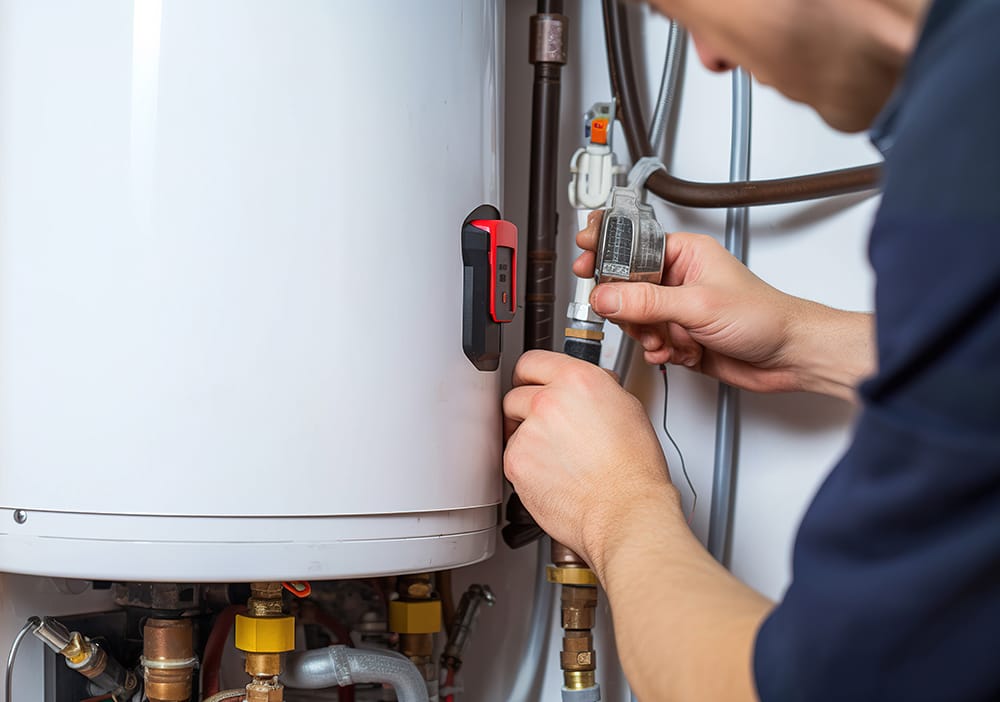
For an electric water heater not working, we start with confirming voltage at the unit before touching any internal components, because a no-power diagnosis sends us toward an electrical supply problem rather than a component replacement. A tripping reset button on the thermostat usually points to a failed element that is drawing more current than the thermal cutoff allows, or a short somewhere in the heating circuit. We carry the most common heating elements, thermostats, and thermocouples for the major brands found in Brentwood homes and complete most repairs on the first visit. For a unit that has experienced a hard electrical failure, we also assess whether the unit’s age and condition make replacement a more sensible investment than a repair.
Sediment Buildup and Poor Performance
Sediment buildup is the slow, quiet water heater problem that affects almost every tank water heater in Brentwood eventually, because the mineral content of the local water supply leaves behind calcium and magnesium deposits every single heating cycle. Over months and years, those deposits accumulate at the bottom of the tank, creating a layer that insulates the heating element from the water and forces the unit to run longer and work harder to reach the set temperature.
Homes in Brentwood that skip regular water heater maintenance see this effect most clearly in rising utility bills, declining hot water volume, and eventually the loud popping and rumbling sounds that indicate heavy sediment presence.
Recognizing the Problem
- Hot water that runs out faster than it used to for the same household demand
- Energy bills that have risen without other explanation
- Water heater that seems to run for much longer heating cycles than before
- Slightly discolored water with small particles when the hot tap is first opened
- Reduced flow from the hot side of fixtures compared to the cold side
- A water heater that has never been flushed in more than three years
- Popping or crackling sounds during heating that were not present before
- The unit takes noticeably longer to recover after a large demand like a full bathtub
A water heater flush is the standard maintenance service for sediment buildup, and it is one of the most cost-effective things a Brentwood homeowner can do to extend the life of their water heater and maintain efficiency. We connect a flush hose to the drain valve, run the sediment out completely, and inspect the anode rod condition while we have access. For tankless water heaters in Brentwood, descaling the heat exchanger is the equivalent service, which involves circulating a descaling solution through the unit to dissolve the mineral deposits that accumulate in the narrow heat exchanger channels.
Water Heater Repair vs Replacement in Brentwood
One of the most common questions we hear from Brentwood homeowners is whether to repair a failing water heater or replace it entirely. There is no single right answer, but there are clear signals that point toward each choice, and we are always honest about which way we think the evidence points.
When to lean toward repair: the unit is less than eight years old, the failure is a component issue rather than a tank structural problem, the tank body shows no signs of corrosion or leaking, and the cost of the repair is modest relative to what a new unit would cost. A failed thermocouple on a six-year-old gas water heater, a burned-out lower element in a four-year-old electric unit, or a faulty pressure relief valve on an otherwise solid tank are all clear repair situations.
When to lean toward replacement: the unit is ten years old or older, the tank body is showing rust streaks or active leaking from the base, the same component has failed more than once in a short period, or the repair needed is expensive enough that the investment does not make sense relative to the unit’s remaining useful life. A water heater that is leaking from the tank bottom cannot be repaired, period. Once the tank lining has corroded through to the point of leaking, the only option is a new unit.
In Brentwood homes where the water heater has been dealing with heavy sediment buildup for years without maintenance, even a unit that has not yet developed a structural failure may be at a point where repair spending is better redirected toward a new installation. When sediment has reduced the tank’s effective volume significantly and the heating efficiency is poor, running a new unit is genuinely more economical over the next five years than continuing to maintain the old one.
The replace-versus-repair conversation in Brentwood also involves the type of replacement to consider. A homeowner whose tank unit has failed may want to explore whether a tankless water heater installation makes sense for their household. Tankless units eliminate the standby heat loss of a storage tank, provide unlimited hot water on demand, and take up considerably less space, which is a real advantage in Brentwood homes where the water heater is in a closet or utility space with limited room. We discuss both options honestly and help homeowners understand what each one involves in terms of upfront work, gas line or electrical requirements, and long-term operating characteristics.
When to replace vs repair a water heater in Brentwood also depends on energy efficiency considerations. Newer high-efficiency tank units and tankless systems perform significantly better than older models by modern standards, and the long-term energy savings can offset a portion of the replacement investment over time.
Tankless Water Heater Installation and Repair
Tankless water heater installation in Brentwood is something we do regularly, and we approach it as a complete project rather than just hanging a new unit on the wall. A proper tankless installation involves sizing the unit correctly for the household’s peak demand, running or upsizing the gas line to deliver adequate volume and pressure for the burner’s requirement, installing the correct venting configuration, and setting the unit’s operational parameters before the first use.
The most common mistake we see in tankless installations done by less experienced contractors in Brentwood is an undersized gas supply line. A tankless water heater draws a high volume of gas during operation, far more than a tank-style unit, and a line that worked fine for the old tank may not deliver sufficient pressure and volume for the new unit at full demand. When the gas supply is inadequate, the unit may work adequately when one faucet is running but fault or lose temperature when a second demand is added. We size the gas line correctly before installation rather than finding out after the fact that the unit cannot perform as intended.
For homeowners in Brentwood already living with tankless water heater systems, the most common repair issues we encounter are scale buildup in the heat exchanger from local hard water conditions, flow sensor fouling, ignition component wear, and error codes related to venting restriction. Descaling is a maintenance service that extends heat exchanger life significantly and should be scheduled periodically in Brentwood given the local water mineral content. Ignition and sensor replacements are components we carry for the major brands and can install on a first visit in most cases.
Brentwood homeowners considering a tankless upgrade often ask about the upfront investment compared to a traditional replacement. The honest answer is that a tankless installation in an existing home costs more than swapping in another tank unit, primarily because of the gas line work and venting modifications typically required. But the operational advantages, including no standby heat loss, unlimited hot water capacity, and a longer expected service life, make it a worthwhile consideration for many households, particularly those with higher hot water demand or limited space for a large tank.
Water Heater Installation Services in Brentwood
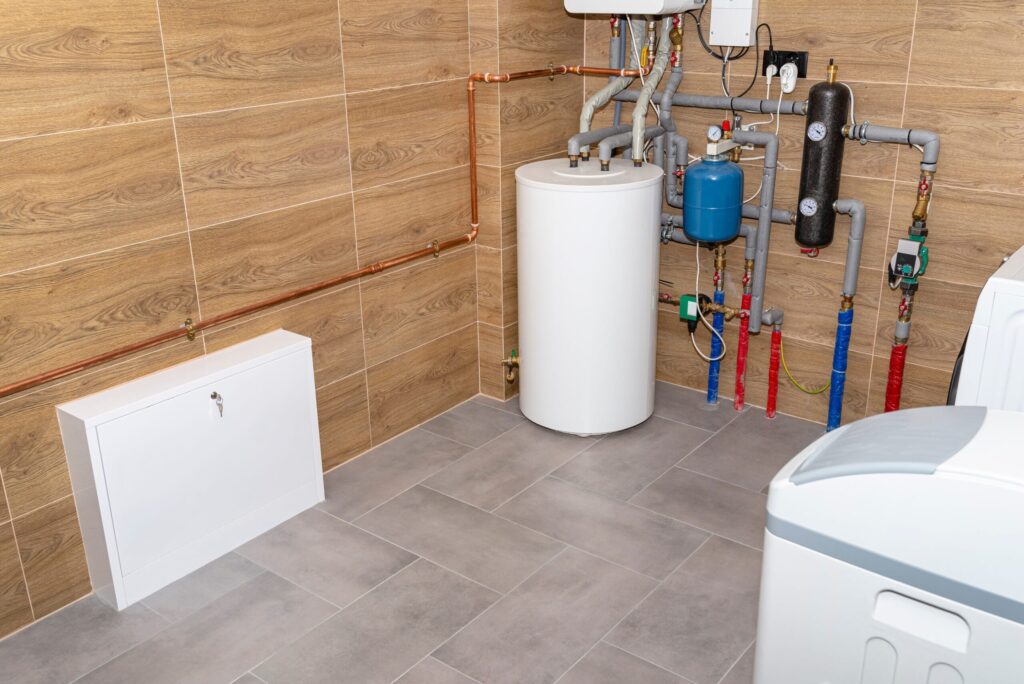
When it is time for a new water heater installation in Brentwood, the process starts with choosing the right unit for the home, the household’s demand, and the available energy infrastructure. Brentwood Plumbing Pros installs both traditional tank-style water heaters and tankless units, covering gas, electric, and propane-fueled systems.
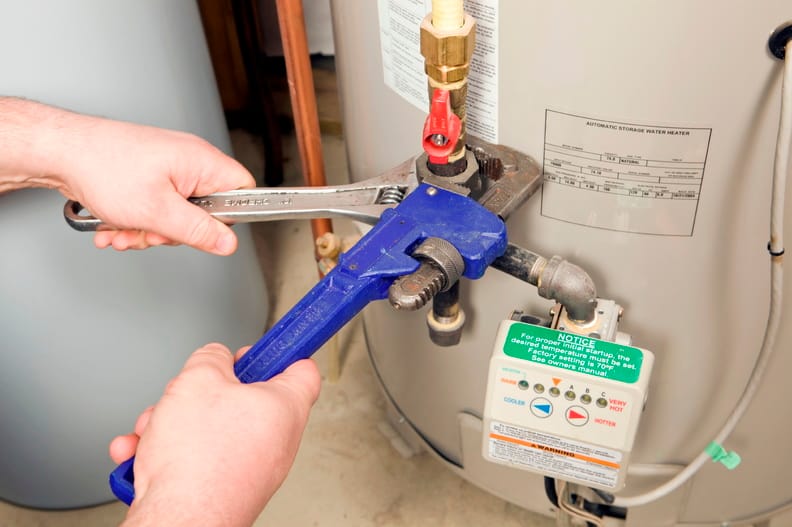
For a traditional tank installation, we remove the existing unit, inspect and update the supply connections, replace the flex connectors if they are aged, set the new tank in place, reconnect the water supply lines, connect the gas line or electrical supply depending on the fuel type, and adjust the thermostat setting before testing the unit through a full heating cycle to confirm operation. We also check the pressure relief valve discharge routing to confirm it meets current installation requirements.
For a tankless installation in an existing Brentwood home, the process is more involved. We assess the gas supply line from the meter to the installation location, determine whether the existing line diameter and run length can deliver the required BTU input, and upsize or extend the line as needed. We install the new venting system, which for a direct-vent tankless unit involves bringing fresh combustion air in and exhausting combustion products out through a dedicated sealed vent system. We connect the unit, set the temperature and operational parameters, and run it through a full range of demand scenarios to confirm it performs correctly under real household conditions.
Why Brentwood Homeowners Choose Brentwood Plumbing Pros for Water Heater Service
We Know Brentwood’s Water Conditions and What They Do to Your System
The hard water in East Contra Costa County is not a generic fact we repeat, it is something our team deals with in real Brentwood homes every week. We see what heavy mineral deposits do to heating elements, heat exchangers, anode rods, and tank linings, and we account for it in every recommendation we make. A homeowner in the Apple Hill neighborhood called us about a water heater making loud noises that had been running for nine years. After inspecting the unit and flushing out a substantial sediment layer, we also checked the anode rod and found it fully depleted. Those are two problems Brentwood’s water conditions specifically accelerate, and addressing both in one visit extended the unit’s useful life by several more years rather than putting the homeowner into an unnecessary replacement.
Thorough Diagnostics Before Any Recommendation
We do not recommend replacement when repair is the right answer, and we do not replace parts by guesswork when testing can tell us exactly what failed. In Brentwood, where homeowners are making real financial decisions about whether to repair or replace a water heater, an accurate diagnosis is genuinely important. A homeowner in Knightsen reached out because her electric water heater was not working at all. A less thorough approach might have immediately recommended a new unit. We ran our standard diagnostic, found the breaker for the water heater had developed a weak connection in the panel causing intermittent power loss, corrected the connection, and the unit has been running reliably since with no part replacement needed.
Respect for Your Home Throughout the Job
Water heater work can be physically messy, involving tank draining, possible sediment discharge, and work in tight utility spaces. We bring the equipment to contain and remove water and sediment properly, we protect the surrounding floor and cabinetry during the work, and we leave the installation area clean when we are done. Homeowners in Brentwood’s family neighborhoods should not have to clean up after a plumber, and we hold ourselves to that standard consistently.
Experience With Traditional and Tankless Systems
Some plumbing companies in the East Bay are comfortable with tank water heaters but lack real experience with the installation requirements and failure modes of tankless systems. We work on both types regularly in Brentwood and the surrounding area, and we are experienced enough with tankless units to diagnose fault codes, replace sensors and ignition components, size gas lines correctly for peak demand, and set up the units properly for the local water conditions that accelerate heat exchanger fouling. A homeowner in the Sand Creek neighborhood had a tankless unit that was running perfectly fine for eight months and then started fault-coding repeatedly. The issue turned out to be a partially blocked heat exchanger from mineral deposits. A descaling service cleared the fault and restored normal operation.
Same-Day Response When There Is No Hot Water
We understand that a household without hot water is not a situation that can comfortably wait three days for a scheduled appointment. Water heater repair same day is a priority we try to deliver consistently for Brentwood homeowners. When we schedule an urgent water heater call, we arrive with the diagnostic tools and the most common repair components on the truck so that the job can be completed in one visit in most situations. For water heater replacements where a same-day part is not available, we are honest about timing and work to keep the disruption as short as possible.
Our Water Heater Service Process in Brentwood
1. You Reach Out
You contact Brentwood Plumbing Pros with a description of your water heater issue. We ask a few questions about the unit type, approximate age, fuel source, and the symptoms you are experiencing. This helps us arrive with the most likely repair parts on the truck and a realistic starting point for the diagnosis.
2. We Schedule and Arrive
We confirm a visit window and arrive on time. For urgent no-hot-water situations in Brentwood, we prioritize same-day or next-morning scheduling whenever possible. We arrive at the agreed time and begin with a professional introduction and a brief walkthrough of what you have observed before we inspect the unit.
3. Thorough Diagnosis and Clear Explanation
We run a complete diagnosis of the water heater system, including the unit itself, the gas or electrical supply, the venting, and the condition of the tank or heat exchanger. We test components rather than replacing them speculatively, and we explain our findings in plain language before recommending any repair or replacement. You hear the full picture before any work begins.
4. Repair or Installation
We complete the repair or installation with the right parts and techniques for the unit type and the local conditions. For repairs, we test the repaired component under actual operating conditions before we consider the job done. For installations, we run the new unit through a full heating cycle and check all connections, the venting system, and the temperature output before handing over the finished installation.
5. Final Testing and Cleanup
Before leaving, we confirm normal hot water delivery from at least one fixture, verify no leaks at any supply connection, check that the unit’s safety devices are functioning correctly, and clean up the work area completely. For tankless installations, we review the unit’s operating controls and maintenance requirements with the homeowner so they understand how to use and maintain the system going forward.
Water Heater Service Area in and Around Brentwood, California
We provide water heater repair, replacement, and installation services across Brentwood and the surrounding communities of East Contra Costa County. Whether you are in Prewett Ranch, Brentwood Golf Club, Deer Ridge, Shadow Lakes, the older neighborhoods near downtown Brentwood, or an outlying community in our service area, we cover you with the same expertise and responsiveness.
- Brentwood, CA (all neighborhoods)
- Oakley, CA
- Antioch, CA
- Discovery Bay, CA
- Byron, CA
- Knightsen, CA
- Bethel Island, CA
- Pittsburg, CA
- Clayton, CA
- Concord, CA
- Danville, CA
- San Ramon, CA
True local water heater service in Brentwood means arriving with knowledge of the water conditions in this specific area, experience with the types of homes and systems common in East Contra Costa County, and the responsiveness that comes from being a local team rather than a regional chain routing calls through a central dispatch. We take water heater calls in Brentwood seriously because we are part of the same community we serve.
Professional Water Heater Repair vs DIY Attempts
There are genuinely no water heater repairs that are safely handled by an untrained homeowner, and the reasons for that are practical and specific, not just general caution.
Electric water heaters operate on 240-volt circuits with current levels that are lethal if proper isolation is not confirmed before any work is done inside the unit. The procedure for a heating element replacement or thermostat swap requires confirming power is off at the breaker and verifying with a voltmeter before touching any terminal. A homeowner who turns the breaker off but does not verify with a meter can receive a shock from residual voltage or from a breaker that did not fully interrupt the circuit.
Gas water heaters involve a gas supply connection, a pilot assembly or electronic ignition system, and a flue venting path that must all be reassembled correctly after any work. An improperly reconnected gas line fitting can produce a slow leak that builds up in an enclosed utility space. A flue connector that is not fully seated can allow combustion gases, including carbon monoxide, to enter the living space rather than exhaust outside. Neither of these failure modes is immediately visible or obvious.
Pressure relief valve replacement, which looks like a simple part swap, involves working on a system that is under both water pressure and thermal pressure. Removing the pressure relief valve without properly depressurizing the system can result in scalding water discharge. Installing the wrong replacement valve, one with the wrong pressure or temperature rating for the unit, leaves the water heater without functional overpressure protection.
In Brentwood homes where sediment buildup from hard water conditions has been accumulating for years without a flush, attempting a DIY flush of the drain valve is also riskier than it appears. A drain valve that has not been opened in several years is often partially scaled and can fail to reseat properly after opening, leaving a slow drip or a running drain that requires valve replacement to stop.
Tankless water heater work in Brentwood requires specialized tools to descale the heat exchanger, specific knowledge of the fault code system for each manufacturer, and in many cases a gas line assessment that is beyond the scope of homeowner capability. A tankless unit that is fault-coding can appear to be malfunctioning when it is actually performing a safety shutdown for a legitimate reason that needs to be understood and addressed correctly, not bypassed.
The most honest summary is this: water heater systems involve three potential hazards, electricity, gas, and scalding water, any one of which can cause serious injury when handled without the right training and equipment. The professional repair path is the safe path, and for Brentwood homeowners dealing with any water heater issue beyond resetting a tripped breaker or relighting a pilot light using the published procedure on the unit’s label, Brentwood Plumbing Pros is the right call.
Plumbing Pro Services
Complete Plumbing Care for Your Entire Home
Whether it’s the kitchen, bathroom, or sewer line, we have the tools and training to handle any challenge your plumbing system throws at us.
We Deliver Expert Results
Don’t gamble with your plumbing. We combine years of experience with modern technology to deliver lasting repairs and installations. Our team respects your time and your property.
- Fixture Installation
- Leak Detection
- Modern Diagnostics
- Drain Cleaning
Frequently Asked Questions About Water Heater Repair and Installation in Brentwood
Water heater repair in Brentwood?
Brentwood Plumbing Pros handles water heater repair for tank-style and tankless units throughout Brentwood, California and the surrounding East Contra Costa communities. We repair electric and gas water heaters, covering everything from failed heating elements and pilot assembly issues to sediment buildup, leaking connections, and thermostat failures. Same-day service is available for urgent no-hot-water situations. Reach out to us for assistance with any water heater problem in your Brentwood home.
How much does water heater replacement cost in Brentwood?
Water heater replacement in Brentwood varies based on the type of unit being installed, the complexity of the work involved, and whether any gas line or venting modifications are needed. A direct tank-to-tank swap of the same fuel type and size is typically the most straightforward scenario. A tankless installation in a home that previously had a tank unit involves additional gas line work and venting changes that add to the scope. We assess each situation individually and give you a clear picture of exactly what is involved before any work begins, with no hidden additions after the fact.
Do you install tankless water heaters?
We do, and tankless water heater installation in Brentwood is a service we perform regularly for homeowners upgrading from tank systems. We handle the complete installation including gas line sizing, supply line connections, venting, and unit configuration. We also install electric tankless units for homes without gas service. We are experienced with the requirements specific to Brentwood’s housing and local water conditions, including the importance of setting the unit up for the periodic descaling that hard water areas require.
What should I do if I have no hot water?
First, check whether the issue is isolated to one fixture or affecting the whole house. If it is whole-house, check that the circuit breaker for an electric unit has not tripped, or that the pilot light on a gas unit is lit. For a gas unit, follow the relighting instructions on the label. If the unit appears to be operating but still producing no hot water, or if you smell gas at any point, call Brentwood Plumbing Pros for a professional diagnosis. Do not attempt to access internal components of the unit. If you smell gas or suspect a gas leak, go outside immediately and call 911 – this is a serious emergency that needs urgent attention from the gas company.
How long does water heater installation take?
A straightforward water heater replacement in Brentwood, swapping a tank unit for a comparable new tank unit with the same fuel type and size, typically takes two to four hours including removing the old unit, making supply and fuel connections, filling and testing the new unit, and cleaning up. A tankless installation in an existing home that requires gas line work, a new venting run, or electrical modifications takes longer, usually a full day or close to it depending on the scope of the supporting work required. We give you a realistic time estimate before we begin so you can plan accordingly.
Do you work on older homes in Brentwood?
Working in older Brentwood homes is something our team does regularly. Older properties in established Brentwood neighborhoods may have galvanized supply lines, older-style gas valve fittings, non-standard connection configurations, or water heater installations in confined spaces that newer construction would not allow. We bring experience with these conditions rather than assumptions based on newer construction standards, and we assess the supply line condition, the venting path, and the space constraints before finalizing our approach for any water heater installation or repair in an older home.
Signs my water heater needs replacement?
The clearest signs that a water heater in Brentwood is approaching the end of its useful life include a tank body that is leaking from the bottom or showing visible rust and corrosion on the exterior, a unit that is more than ten to twelve years old and requiring repeated repairs, rusty hot water that does not clear after a flush and anode rod replacement, and a unit that cannot maintain adequate temperature or recovery rate even after full servicing. Repeated failures of the same component in a short period are also a strong signal that the unit is at end of life rather than responding reliably to repair.
Can hard water damage my water heater?
Yes, and Brentwood’s water conditions make this a real concern for local homeowners. The calcium and magnesium in hard water deposit as scale inside the tank, on heating elements, and inside tankless heat exchangers with every heating cycle. Over time, this sediment reduces efficiency, shortens heating element life, accelerates corrosion of the tank lining after the anode rod is depleted, and can completely block the narrow channels in a tankless heat exchanger. Regular water heater flushing and anode rod inspection for tank units, and periodic descaling for tankless units, are the most effective ways to manage this in Brentwood homes.
What is an anode rod and why does it matter in Brentwood?
An anode rod is a sacrificial metal component inside the water heater tank, typically magnesium or aluminum, that corrodes preferentially in place of the tank’s steel lining. As long as the anode rod has material left to offer, it protects the tank wall from the corrosive action of the hot water, which in Brentwood includes the mineral content that accelerates that corrosion. When the anode rod is fully consumed, the tank lining begins to corrode instead, leading to rust in the water and eventually a leaking tank. Periodic anode rod replacement extends tank life significantly, particularly in hard water areas like Brentwood.
Is a water heater near me something Brentwood Plumbing Pros can assess without a full replacement commitment?
Absolutely. We come out, inspect the unit, run our diagnostics, and give you an honest assessment of the unit’s condition and what your options are. There is no obligation to commit to any service beyond the diagnostic visit. If the unit is repairable and repair is the right choice, we say so and complete the repair. If replacement is the right call based on the unit’s condition and age, we explain exactly why and present options. The decision is yours, made with full information.
Brentwood’s Trusted Water Heater Service Team
Hot water is not a luxury in a Brentwood household, it is a daily necessity for cooking, bathing, laundry, and dishwashing. When something goes wrong with your water heater, Brentwood Plumbing Pros brings the local experience, honest assessment, and skilled workmanship needed to get it right the first time. From a simple element swap to a full tankless water heater installation, we handle every part of the job thoroughly and with real respect for your home and your time.
Reach out to us for assistance with any water heater issue in Brentwood or the surrounding East Contra Costa communities.
Zip codes we serve: 94513, 94531, 94561, 94509, 94511, 94514, 94505, 94517, 94565, 94521, 94506, 94582